

Mar . 31, 2026 02:45 Back to list
Comprehensive Guide to Backflow Check Valves Functionality and Applications
Understanding Backflow Check Valves: A Comprehensive Guide
Protecting water systems from contamination is crucial, and backflow check valves play a vital role in this process. These valves prevent the reverse flow of liquids and gases, safeguarding potable water supplies and ensuring efficient operation of various industrial processes. This article will delve into the functionality, types, applications, and proper selection of backflow check valves, providing a detailed overview for professionals and anyone interested in understanding this essential component. Preventing backflow is more than just compliance; it’s about protecting public health and maintaining system integrity.
How Do Backflow Check Valves Work?
At their core, backflow check valves operate on a simple principle: allowing flow in one direction while automatically preventing flow in the opposite direction. They utilize a variety of internal mechanisms, such as swing checks, lift checks, or ball checks, to achieve this. When forward pressure exists, the valve opens, permitting fluid to pass through. When pressure reverses, the internal mechanism seals, blocking the reverse flow. This automatic operation requires no external power source, making them reliable and cost-effective solutions. Understanding this mechanism is key to appreciating the broad applications of these valves in diverse industries. SR Machinery S offers a range of high-quality backflow check valves designed for optimal performance and durability.
Key Benefit: Automatic operation, requiring no external power and providing reliable backflow prevention.
Types of Backflow Check Valves
Several types of backflow check valves are available, each suited for different applications and flow conditions. Some common types include: Swing check valves, which use a hinged disc; Lift check valves, which utilize a vertically moving disc; Ball check valves, employing a ball to seal the valve; and Silent check valves, designed to minimize water hammer. The choice of valve type depends on factors such as fluid type, pressure, temperature, and flow rate. Careful consideration of these factors is crucial for selecting the most appropriate valve for a specific application.
Common Backflow Check Valve Types:
• Swing Check Valves: Simple, cost-effective, suitable for low to medium flow rates.
• Lift Check Valves: Offer good sealing, ideal for high-pressure applications.
• Ball Check Valves: Excellent for handling fluids with solids, durable and reliable.
• Silent Check Valves: Minimize noise and water hammer, suitable for residential applications.
Backflow Check Valve Comparison
Choosing the right check valve requires understanding the strengths and weaknesses of each type. Here's a comparison to help you make an informed decision:
Applications of Backflow Check Valves
Backflow check valves are essential in numerous applications, including: potable water systems, wastewater treatment plants, fire protection systems, irrigation systems, and industrial processes involving hazardous fluids. In potable water systems, they prevent contaminated water from flowing back into the clean water supply. In industrial settings, they protect pumps and equipment from damage caused by reverse flow. Proper installation and maintenance are critical for ensuring the long-term effectiveness of these valves.
Selecting the Right Backflow Check Valve
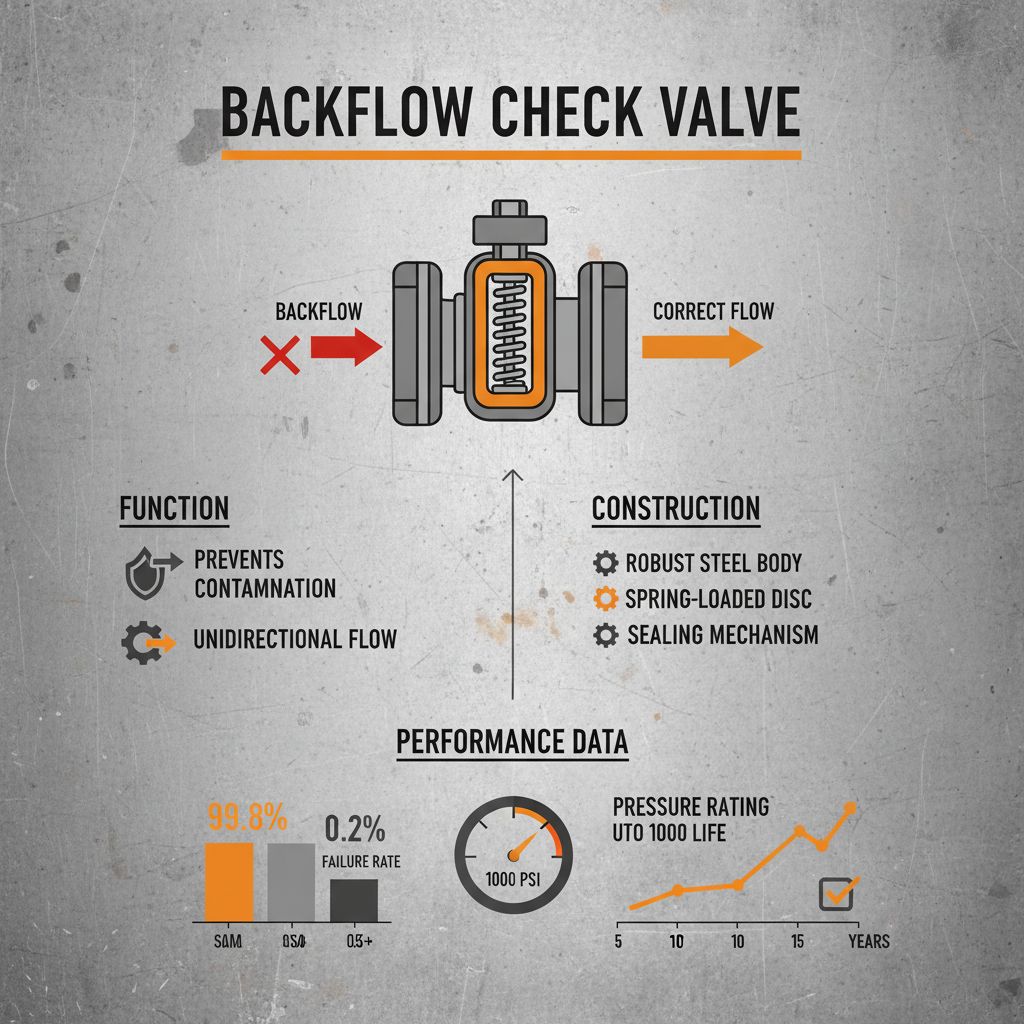
When selecting a backflow check valve, consider factors such as fluid type, pressure, temperature, flow rate, and material compatibility. Choose a valve constructed from materials suitable for the specific fluid being handled to prevent corrosion or degradation. Ensure the valve's pressure rating exceeds the maximum pressure of the system. Regular inspection and maintenance are essential for ensuring optimal performance and preventing failures. SR Machinery S provides expert guidance to help you select the ideal backflow check valve for your application.
Conclusion: Ensuring Water System Integrity
Backflow check valves are a critical component in maintaining the safety and integrity of water systems. Understanding their functionality, types, and applications is essential for professionals and anyone responsible for protecting water supplies. By choosing the right valve and ensuring proper installation and maintenance, you can safeguard against contamination and ensure reliable operation. SR Machinery S is your trusted partner for high-quality backflow check valves and expert solutions.
Frequently Asked Questions (FAQs)
What are the common causes of backflow?
Backflow can occur due to backpressure (higher downstream pressure) or backsiphonage (reduced upstream pressure). Backpressure often happens when pumps or other equipment create increased pressure in the downstream system. Backsiphonage typically occurs when there's a sudden drop in water pressure in the upstream system, such as during a water main break or high water usage, creating a vacuum that pulls water back from downstream. Properly installed and maintained backflow check valves mitigate these risks.
How often should backflow check valves be inspected?
Backflow check valves should be inspected regularly, ideally annually, and after any event that could cause damage, such as a water hammer or a system surge. Inspections should include a visual check for leaks, corrosion, and proper operation. More frequent inspections may be required depending on the application and local regulations. Keeping a record of inspections is crucial for maintaining compliance.
What materials are backflow check valves typically made from?
Backflow check valves are commonly manufactured from materials like brass, stainless steel, PVC, and cast iron. The choice of material depends on the fluid being handled, the operating pressure, and the temperature. Stainless steel is often preferred for corrosive fluids, while PVC is suitable for many water applications. Understanding the compatibility of the valve material with the fluid is vital for longevity and reliability.
Are backflow check valves required by code?
Yes, in many jurisdictions, backflow prevention devices, including check valves, are required by plumbing codes to protect potable water supplies. Regulations vary depending on location and the specific application. It’s essential to consult local plumbing codes and authorities to ensure compliance. Failure to comply with these regulations can result in fines and potential health hazards.
-
Industrial Water Valve Replacement and Precision Maintenance GuideNews04 . Fri, 2026
-
Industrial Carbon Steel Check Valve Guide for Piping SystemsNews04 . Thu, 2026
-
Industrial Guide to Selecting a High Quality butterfly check valveNews04 . Thu, 2026
-
Choosing a Reliable Valve Supplier for Optimal Industrial PerformanceNews04 . Wed, 2026
-
Understanding the Functionality and Applications of a Balon Check ValveNews04 . Tue, 2026
-
Leading Valve Manufacturer Providing Precision Engineered SolutionsNews04 . Mon, 2026
Related PRODUCTS