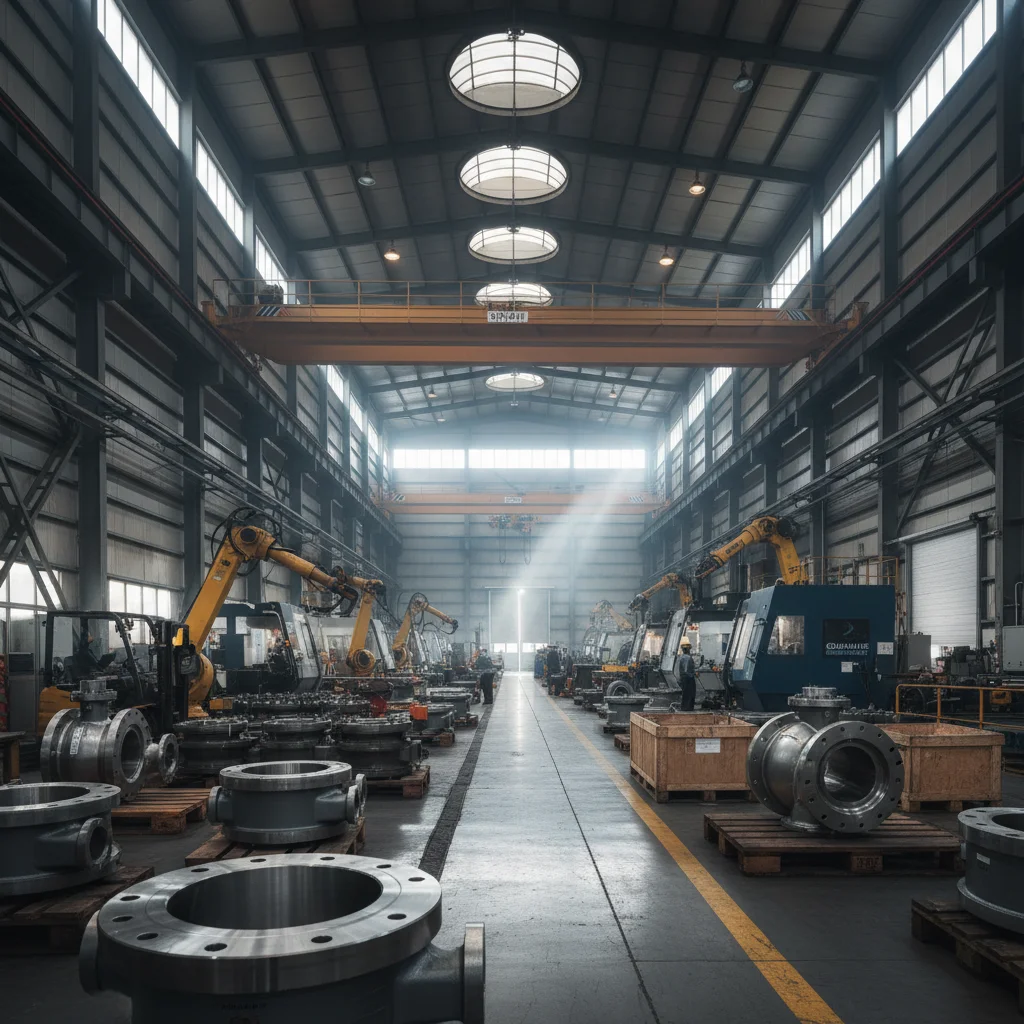

Industrial fluid control systems rely heavily on the reliability of backflow prevention to protect expensive pumps and maintain system pressure. When a system fails due to a faulty valve, the resulting downtime often costs more than the entire valve assembly itself.
Selecting a qualified check valve supplier involves more than comparing price sheets; it requires an analysis of metallurgy, sealing precision, and the specific kinetic demands of the fluid being transported. From heavy-duty industrial piping to precision automotive cooling, the internal mechanism of a check valve determines the operational lifespan of the entire assembly.
This technical observation examines the critical factors in valve procurement, the evolution of casting processes for valve bodies, and how to evaluate supplier capabilities to ensure long-term system stability.

The Role of Material Integrity in Valve Longevity

The durability of a check valve starts with its base material. In high-stress industrial environments, the choice between standard gray iron and high-strength alloys like HT200-HT300 determines how the valve handles pressure spikes and thermal expansion.
For instance, the Storan brand utilizes high-strength gray cast iron with a working surface hardness of HB160-240. This specific hardness range ensures that the valve seat resists erosion from abrasive particles in the fluid stream while maintaining enough ductility to prevent brittle fractures under sudden impact loads.
Engineering the Perfect Seal: Technical Mechanics
The primary function of any valve produced by a professional check valve supplier is to eliminate reverse flow. This is achieved through a precise interaction between the disc and the seat. Any deviation in the machining tolerance—even by a few microns—can lead to "leak-through," which degrades pump efficiency and may cause contamination in sensitive chemical processes.
Technical excellence in sealing is achieved through a combination of surface grinding and precise geometry. When the surface finish reaches Ra ≤ 1.6μm, the contact area between the sealing elements is maximized, significantly reducing the probability of microscopic leak paths forming during the initial operational cycles.
Furthermore, the integration of customized support (OEM/ODM) allows manufacturers to adapt seat materials to the specific chemistry of the fluid, whether it requires the corrosion resistance of specialized coatings or the thermal stability of high-grade alloys to prevent warping at elevated temperatures.
Evaluating Casting Precision and Internal Stress
A common failure point in cast valves is internal stress created during the cooling phase of the foundry process. If these stresses are not removed, the valve body may warp over time, causing the internal alignment to shift and the seal to fail.
True dimensional stability in cast iron valves is achieved through rigorous heat treatment, such as two rounds of artificial annealing at 600°C - 700°C or natural aging for 2-3 years, which effectively eliminates internal casting stress.
The use of resin sand casting further enhances this stability. Compared to traditional green sand casting, resin sand provides a more uniform grain structure and tighter tolerances. This process allows for the creation of complex internal geometries with higher precision, ensuring that the flow paths are optimized and turbulence is minimized.
Performance Metrics for Industrial Valve Selection
When procurement officers evaluate a check valve supplier, they must look beyond the datasheet. Key performance indicators (KPIs) include the cracking pressure, the flow coefficient (Cv), and the cycle life before the first seal replacement.
These metrics are not static; they are influenced by the material's hardness and the precision of the machining. A valve with a hardness of HB160-240 typically shows a higher resistance to wear in high-velocity streams compared to softer alternatives.
Figure 2. Relative Performance Index by Material Hardness
Application Scenarios and Operational Risks
In a typical industrial setting, such as an automotive assembly plant or an aerospace testing facility, valves are often subjected to "water hammer" effects—sudden pressure surges that can shatter a poorly cast valve body. To mitigate this, manufacturers like Storan implement reinforced designs and stringent precision grades (Class 2-3) to ensure the valve can absorb kinetic energy without dimensional drift.
Another critical risk is environmental corrosion. The application of anti-corrosion paint and pickling oil finishes is essential for valves operating in humid or chemically aggressive environments. Without these protections, surface pitting can occur, creating turbulence and eventually leading to catastrophic seal failure.
The Shift Toward Modular Valve Solutions
The industry is moving away from monolithic, fixed-size valve installations toward modular systems. This shift allows operators to replace individual components or upgrade valve capacities without redesigning the entire piping network.
Customized support (OBM/ODM) is becoming the standard, where the valve's operation mode is tailored to the specific flow characteristics of the facility. This includes adjusting the valve's weight and capacity to match the specific torque and pressure requirements of the system.
As automation increases, the integration of valves with smart monitoring systems is the next frontier. Sensors that detect minute changes in seal pressure can alert maintenance teams before a total failure occurs, transforming valve maintenance from a reactive to a predictive model.
Supplier Comparison Framework for Procurement
Choosing the right partner requires a systematic evaluation of their manufacturing ecosystem. A supplier located in a casting hub, such as Botou, China, often has a competitive advantage in raw material access and skilled labor, which translates to more consistent quality in the final cast product.
Procurement teams should assess the supplier's quality assurance process. The use of 3D laser scanning and CMM testing ensures that the valves meet international geometric tolerances, such as ISO 1101, providing a verifiable layer of trust.
Ultimately, the balance between lead time, customization capability, and warranty terms (such as the standard 1-year warranty) defines the total cost of ownership for the industrial user.
| Evaluation Factor | Budget Option | Industrial Grade | Precision Grade |
|---|---|---|---|
| Casting Process | Green Sand | Resin Sand Casting | Investment Casting |
| Material Hardness | Standard Iron | HT200-HT300 (HB160-240) | Hardened Alloy Steel |
| Stress Relief | None/Basic | Artificial Annealing | Multi-stage Aging |
| Tolerance Level | Standard | Precision Grade 2-3 | Ultra-Precision (<0.01mm) |
| Surface Finish | Basic Machining | Surface Grinding (Ra≤1.6μm) | Mirror Polishing |
| Warranty Scope | Limited | 1 Year Comprehensive | Extended Performance Guarantee |
Questions & Answers
A high-quality check valve is defined by its material stability, sealing precision, and resistance to internal stress. Key indicators include the use of high-strength gray cast iron (HT200-HT300), a hardness range of HB160-240, and a manufacturing process that includes artificial annealing to prevent warping. Additionally, a surface finish of Ra ≤ 1.6μm is critical for ensuring a leak-proof seal under high-pressure conditions.
Resin sand casting offers superior dimensional stability and a more uniform grain structure. It allows for tighter tolerances in complex geometries, such as valve seats and internal flow paths, which reduces turbulence and minimizes the risk of casting defects. This results in a product that is more consistent and less prone to failure under the kinetic stress of industrial fluid movement.
The choice depends on the fluid's abrasiveness and the system's pressure. For standard industrial use, HB160-240 provides a balance between wear resistance and toughness. If the fluid contains high concentrations of particulates, a higher hardness is required to prevent erosion of the seat. Conversely, for extremely high-impact systems, a slightly lower hardness may be preferred to avoid brittle fractures.
Internal stress, if not removed through annealing or aging, can cause the valve body to deform over time or during thermal cycles. This deformation leads to misalignment between the disc and the seat, resulting in internal leakage (backflow). By implementing a 3-step heat treatment process, suppliers ensure that the valve maintains its geometric precision throughout its operational life.
Yes, by tailoring the valve's specifications—such as material, size, and operation mode—to the exact needs of the system, you can reduce unnecessary pressure drops and wear. A perfectly matched valve operates more efficiently, requires less frequent maintenance, and protects upstream equipment more effectively than a generic "off-the-shelf" solution, lowering the total cost of ownership.
Look for suppliers who adhere to recognized geometric and quality standards such as ISO 1101 or GB/T 1958-2017. Verification through 3D laser scanning or CMM testing reports is a strong indicator of a supplier's commitment to precision. Additionally, a clear warranty policy and evidence of a structured quality control process (from foundry to final machining) are essential for industrial-grade procurement.
Final Thoughts
The efficiency of an industrial fluid system is only as strong as its weakest seal. By prioritizing material integrity, casting precision, and verified heat treatment, companies can significantly reduce the risk of unplanned downtime and system failure.
Moving forward, the integration of customized, high-precision components from a reliable check valve supplier will remain the most effective strategy for optimizing operational longevity and reducing the total cost of industrial maintenance.